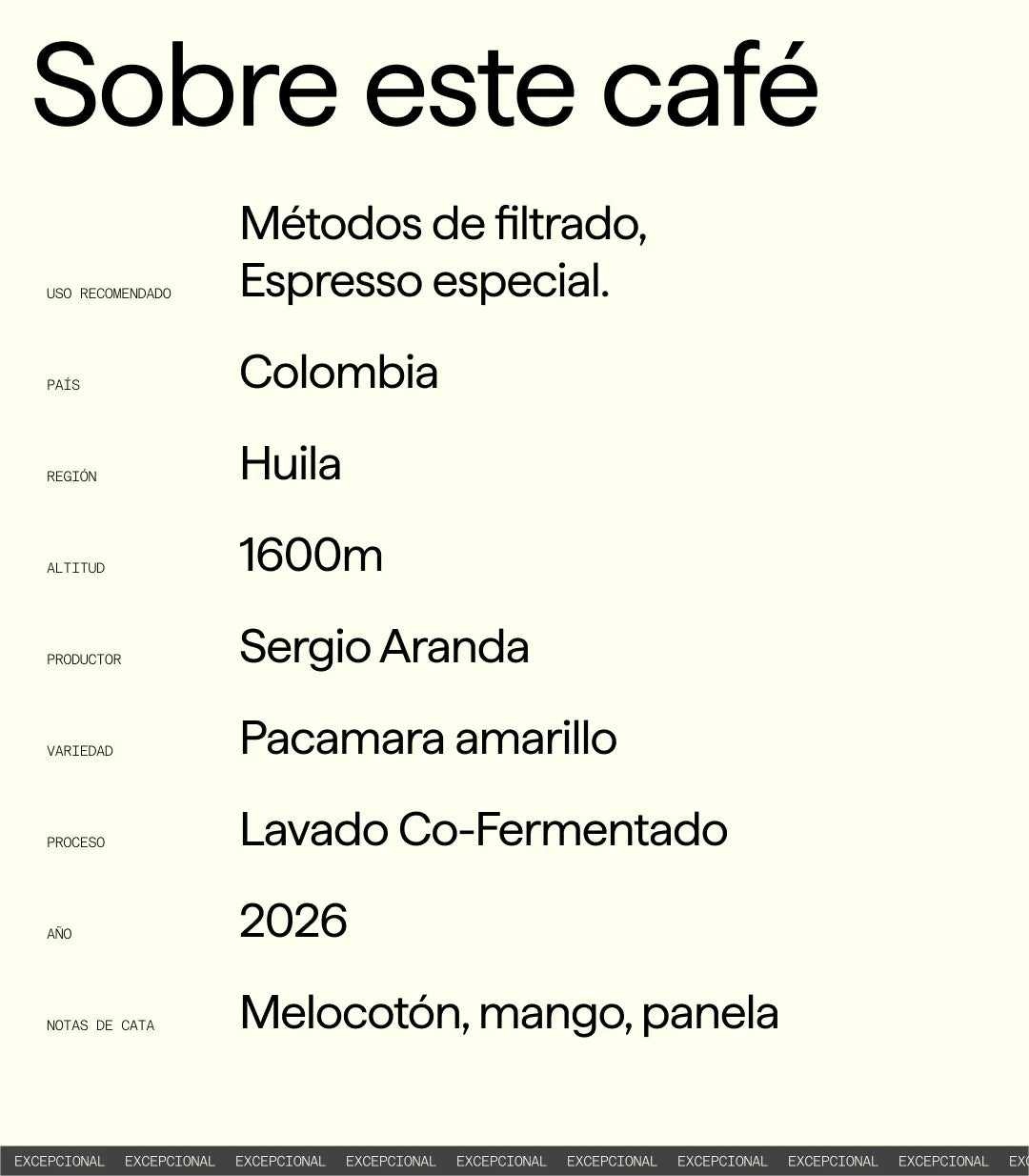
Discover this coffee in detail
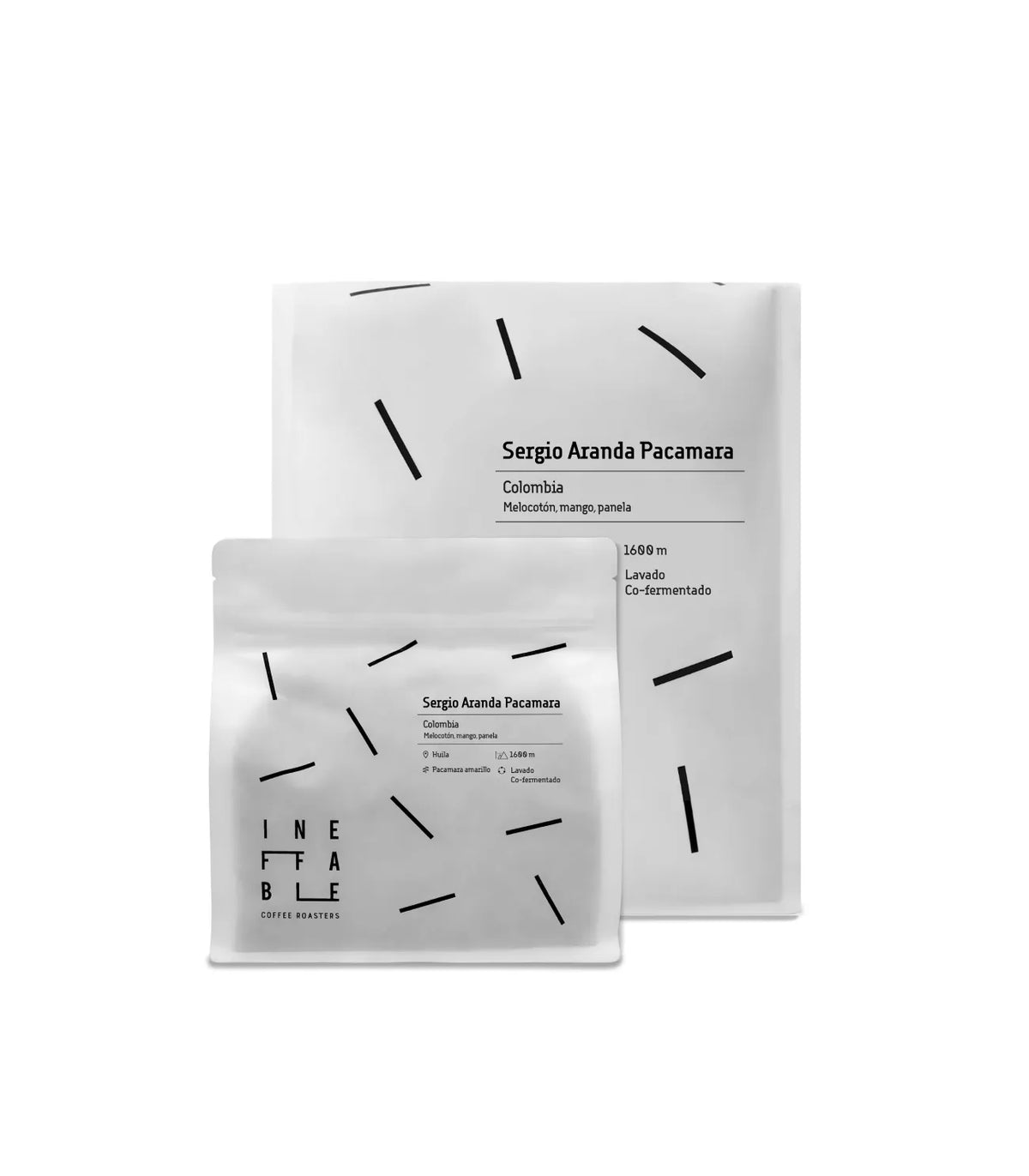
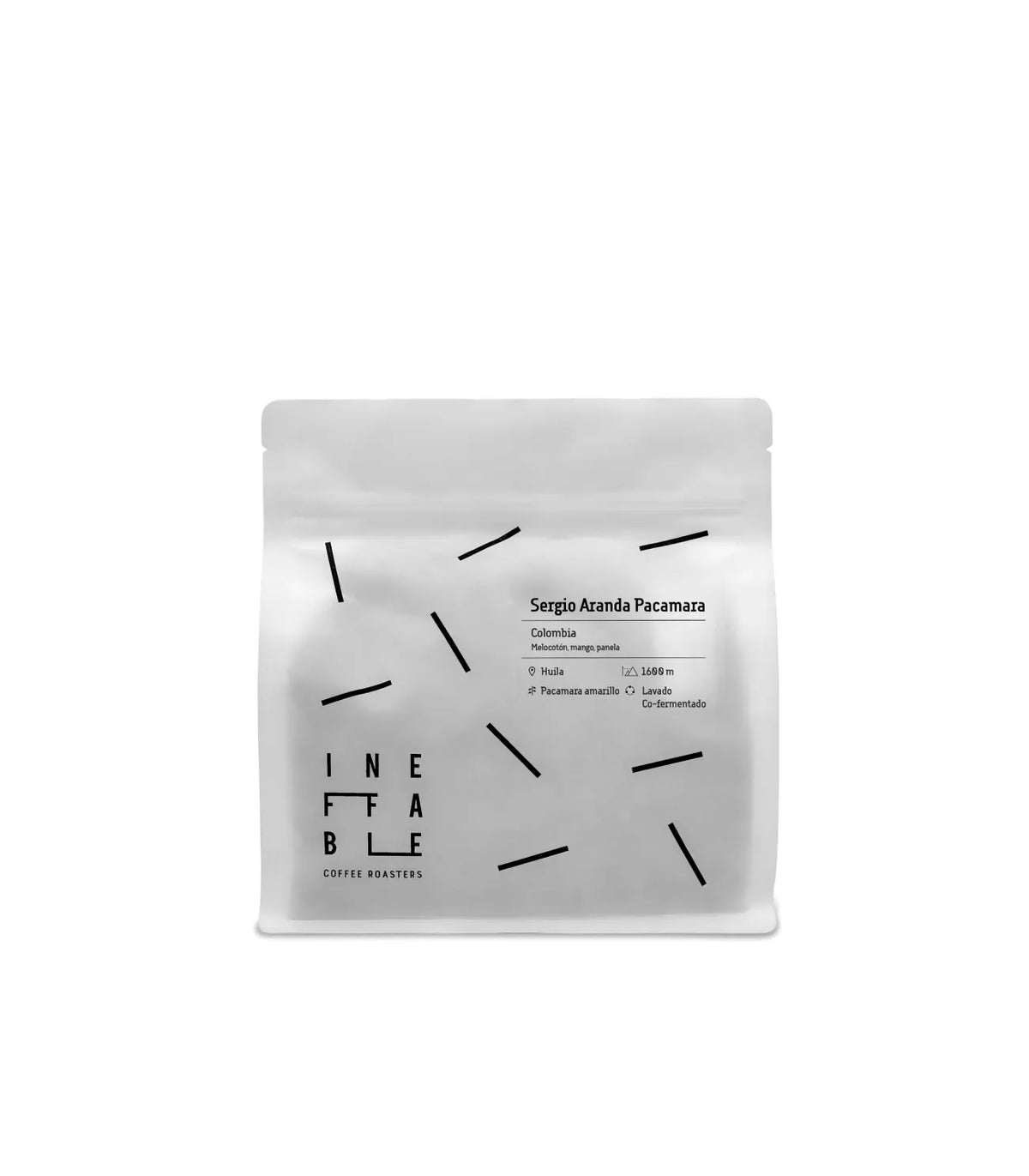
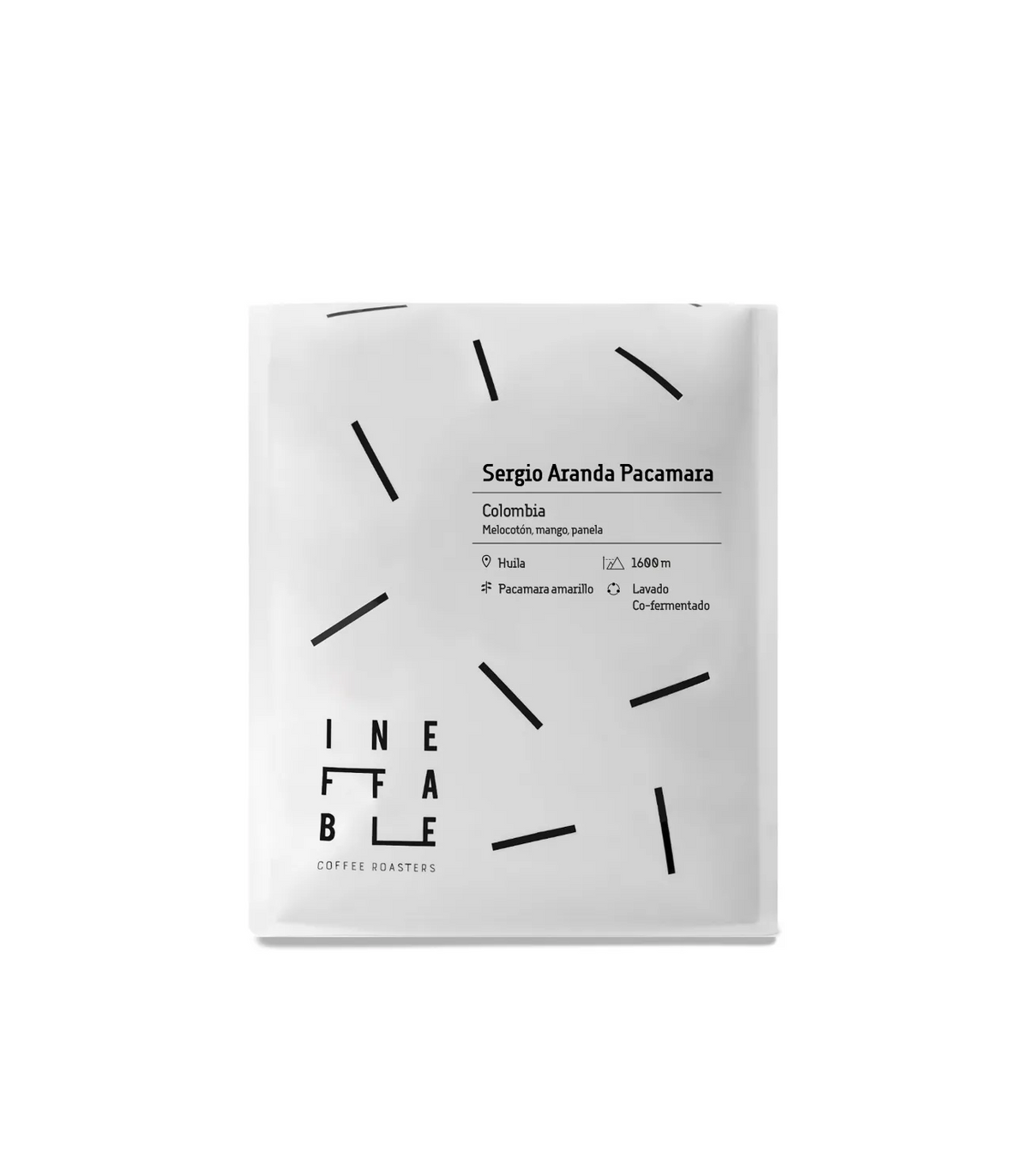
Yellow Pacamara is one of the most distinctive varieties in specialty coffee. A cross between Pacas and Maragogipe, this rare varietal is known for its yellow cherries when ripe and the exceptional size of its beans.
At Finca Anaya in San Adolfo, Huila, Sergio Aranda grows this variety alongside other microlots of Pink Bourbon, Gesha and Castillo, using particularly selective picking to ensure only ripe cherries are harvested.
Its washed co-fermented process combines an initial fermentation in cherry with several stages of fermentation and inoculation using yeast, coffee must and a pre-fermented fruit mixture.
The result is an exceptional and uncommon coffee, created for those looking to discover unique varieties and processes that take their expression in the cup a step further.
Meet the producer
A rare variety, cultivated with patience in the mountains of Huila
Some coffees stand out because of what they tell us about a place. Others because of a rare variety or a process that brings its character into sharper focus. Sergio Aranda’s Yellow Pacamara brings these elements together.
In San Adolfo, Huila, between two great mountain ranges and surrounded by extraordinary biodiversity, lies Finca Anaya. The Aranda Gómez family has been growing coffee here for more than three decades, across just 4.5 hectares where varieties including Pink Bourbon, Gesha, Castillo, Red Bourbon and, of course, this distinctive Yellow Pacamara grow side by side.
At this scale, every lot matters. Harvesting is particularly selective, with around 90% of the cherries picked at full maturity. It may sound like a small detail, but when working with such a distinctive variety, precision at every stage can make all the difference.

Yellow Pacamara: a variety worth discovering
Pacamara is already an uncommon variety. It was developed in El Salvador in the 1960s by crossing Pacas with Maragogipe, bringing together the adaptability of one with the exceptionally large beans of the other. Yellow Pacamara adds another distinctive trait: its cherries turn yellow as they ripen, rather than the familiar red.
This variation was identified in Nicaragua, on farms belonging to the Mierisch family, and has since become one of those small rarities that attract particular interest among those looking to explore less familiar varieties.
But its appeal goes beyond appearance. When carefully cultivated, Pacamara can offer a particularly complex and recognisable expression. With this lot, Sergio Aranda has set out to bring that potential to the fore without losing sight of the coffee’s natural character.

When processing becomes part of the story
For this lot, Sergio uses a washed co-fermented process that combines precision with experimentation. The ripe cherries begin with an initial fermentation before being pulped. The coffee then continues its transformation through a further fermentation involving yeast, coffee must and a pre-fermented fruit mixture.
The process continues with a carefully monitored submerged fermentation before the coffee is dried naturally in the sun for between eight and twelve days. Rather than seeking a radical transformation, the aim is to build a cup that is defined, vibrant and clean, bringing out the personality of the variety while adding new layers of flavour.
The result moves between peach and mango, with panela-like sweetness providing structure and balance. It is an expressive, juicy coffee, but with enough creamy texture to keep the cup rounded and approachable.

A small lot with plenty to tell
Finca Anaya represents an approach to coffee built around diversity, careful selection and experimentation. Across just a few hectares, Sergio Aranda grows varieties that allow him to explore what is possible when each lot is treated on its own terms.
This Yellow Pacamara is an invitation into that world. A rare variety, a specific place and a process designed to bring the best out of it. We recommend brewing it as a filter coffee to appreciate its full expression, although it also makes for a fascinating espresso for those curious to discover how a coffee this distinctive changes when concentrated into a smaller cup.
A coffee to slow down for, try something different with, and remember that there are still plenty of stories waiting to be discovered behind every cup.
Fermented Coffee Filter (Standard Recipe)
The following recipe is a guide for preparing coffee at home. Results may vary depending on your equipment, settings, and all the variables that influence extraction.
With each coffee we roast, our team performs tests until they find a recipe that highlights all the coffee's qualities. The one you'll see below includes all the necessary information to reproduce it. Even so, we always recommend trying and experimenting to discover what you like best: use it as a guide and adapt it to your liking.
Remember: the journey is what matters, not the destination.
To consider: Water is the most important factor in achieving a great cup of coffee. Depending on where you live, its composition can vary drastically. Therefore, we recommend using at least filtered water; another option is a mixture of Bezoya and Lanjarón. When adjusting the recipe, change only one variable at a time to identify how it affects the flavor.
It is common to start by adjusting the coffee-to-water ratio. Once you get a cup with a pleasant intensity and mouthfeel, you can modify other aspects of the extraction.
Most pour-over coffee recipes use a ratio between 1:15 and 1:17, with a brew time of between 2:30 and 4:30 minutes.
Kalita / Origami / Orea
We have chosen this method to share our recipes because it is very versatile and easy to adapt to other pour-over systems. The flat bottom and wavy folds of Kalita filters create a wide surface that prevents significant flow blockages caused by the migration of fine particles or clogging.
Kalita/Origami/Orea
Recipe:
- Ratio: 1:17
- Coffee: 20g
- Water: 340g
- Total time: 3:20-3:50min
- Temperature: 90ºC
Variables:
- Resting time: Minimum 4 days after roasting, but best expressed after 10-20 days.
- Water: 100% Bezoya
- Filter: Kalita 185
Equipment:
Kalita/Origami/Orea, Kalita filter, scale, timer, grinder, cup/decanter, and gooseneck kettle.
Method:
- Place the Orea in a cup/decanter and insert the filter. Pour hot water over it to eliminate the paper taste and preheat the equipment.
- Grind the coffee to a recommended level.
- Discard the water, place the Orea on the scale, add the coffee distributing it evenly, tare the scale, and start the timer.
- Pour 60g of water in circular motions and wait 30-40 seconds for the coffee to degas. If the coffee has been recently roasted, allow more time.
- Slowly pour up to approximately 200-250g of water and swirl the Orea once to level the coffee bed and ensure it is completely saturated with water. Never fill to the brim; leave at least a 2 cm gap from the top to limit water bypass around the coffee bed, reducing extraction.
- Continue pouring water slowly as before until you have added the required amount of water.
- Swirl one last time and let the water drain.
- We are aiming for a total time according to the recipe. Adjust the grind size if necessary next time.
Espresso
Here's our most up-to-date recipe. It's important to remember that this recipe is a reference and that many variables will influence the final result of the espresso in your cup: from the condition of your machine and grinder, the water you use, the storage/brewing time of your coffee, to the temperature/pressure, etc. Therefore, you may need to adjust some parameters to achieve a flavorful and balanced espresso based on your specific needs and equipment.
Recipe:
- Ratio: 1:2.1
- Dry: 18gr
- In cup: 38gr
- Time: 30-36s
Variables:
- Resting time: minimum 2 weeks
- Temperature: 94ºC
- Pressure: 6 bars
- Pre-infusion: No
- GH 60 (ppm as CaCO3) KH 30 (ppm as CaCO3)
Machinery and equipment used for this recipe:
- Espresso machine: La Marzocco PB 2GR
- Grinder: Mahlkonig
- Scoop: 22gr VST (without slot)
- Extras: Barista Hustle WDT, Push Tamper (flat, 100% level)
Cold brew
[ Watch the recipe video ]
When making Cold Brew, we typically make larger quantities than with other brewing methods. So, we're providing a recipe for one liter of Cold Brew. If you want to make more or less than this amount, the ratio is 1:14; 1g of coffee for every 14g/ml of water.
Recipe and equipment:
Preparation:
- Grind the coffee to a medium/coarse grind
- Place the coffee directly into the filter of the pitcher or bottle
- Pour the pre-weighed water into the pitcher or bottle
- Stir gently to saturate all the coffee
- Cover the container
- Let it steep for 16-24 hours in the refrigerator (be careful with strong odors!)
- After this steeping time, remove the filter with the coffee, and it's ready.
BONUS:
Bonus 1:You can do an additional filtration with a V60 paper filter, Kalita, cheesecloth, or something similar to get a cleaner and clearer result.
Bonus 2:For the best flavor, consume as soon as it's ready, as it will oxidize over time.
Bonus 3:Do not shake or press the coffee to avoid extracting bitter flavors or sediment.
Bonus 4:You can freeze Cold Brew into ice cubes and use them to chill your Cold Brew or for making other drinks.
Bonus 5:Food safety: wash your hands and utensils properly. Keep for a maximum of 3 days in the refrigerator in a glass container, preferably closed and without additives (sugar, milk, etc.).